

Helpful Tips for Healthy Smiles at Halloween
October 22, 2019
How to Spot Trouble
January 12, 2020
As an adult, a “false” or artificial tooth can replace a missing tooth. If you do not replace it, your other teeth may get out of line and shift. Proper denture care is just as important as looking after your natural teeth. Your dentures will last longer and fit better if you properly take care of them. There are four main types of dentures: fixed bridge, partial dentures, complete dentures, and dental implants.
1. A fixed bridge (or fixed partial denture)
One or more false teeth are held between healthy teeth on both sides. You cannot take this kind of bridge out by yourself.
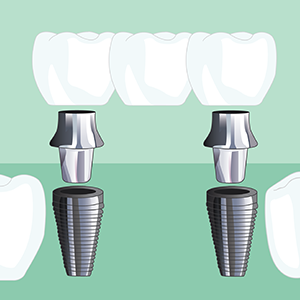
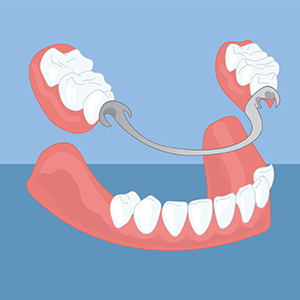
2. A partial denture (or removable partial denture)
One or more false teeth are held in place with clasps that fit onto nearby healthy teeth. You can take the false teeth out yourself, for cleaning and at night.
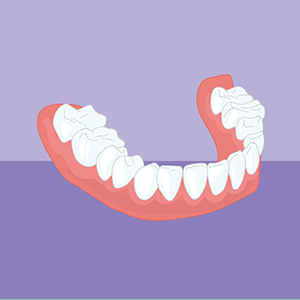
3. Complete dentures
If you lose your teeth, these dentures can completely replace all your natural teeth.
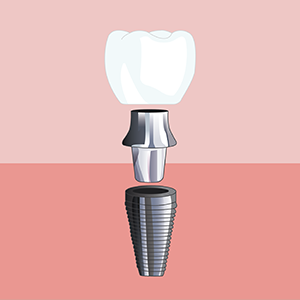
4. Dental implants
Dental implants are used to support false teeth or a fixed bridge. You must have healthy gums and bone (under your teeth) to support the implant. Your dentist (or oral surgeon) will put a small metal post into your jawbone. Over time, the post will integrate with the bone around it. The post (or implant) will act like an anchor to hold one or more false teeth in place.
Looking After Your Dentures
- Clean them every day. Plaque and tartar can build up on false teeth, just like they do on natural teeth.
- Take them out every night. Brush your teeth and gums carefully, using a soft toothbrush. Be sure to clean and massage your gums. If your toothbrush hurts you, run it under warm water to make it softer OR try using a finger wrapped in a clean, damp cloth.
- Soak them overnight. They can be soaked in a special cleaner for false teeth (denture cleanser), in warm water or in a mix of warm water and vinegar (half and half). If your denture has metal clasps, use warm water only for soaking. Soaking will loosen plaque and tartar. They will then come off more easily when you brush.
Caring for Implants
In terms of care, dental implants are a bit different from dentures. The dental implant is attached to bone, which can be treated more like a natural tooth. However, it is important to note that implants are not as strong as natural teeth. Brushing and flossing of implants should be gentle and be done carefully on all sides of the implant. At least once a day, floss very carefully. You will need to be gentle with the floss where the implant meets the gum. (Also, a friendly-reminder to never flush your floss down the toilet!)
If you have false teeth, see your dentist regularly. Your mouth is always changing. This means your false teeth will need to be adjusted from time to time to make sure you have a good fit. If you have a bridge or implants, dental exams will help you make sure that your natural teeth get good care.
Sources:
https://www.cda-adc.ca/en/oral_health/cfyt/dental_care_seniors/dental_care.asp
https://oralb.com/en-us/oral-health/life-stages/adults/denture-care-instructions-tips